Beauty Standards Are Changing for Women Leaders Key Takeaways
For decades, women in leadership felt pressured to conform to narrow, polished beauty ideals—think uniform suits, flawless makeup, and slim silhouettes.
- Beauty standards are changing for women leaders as workplaces value diversity in looks, body types, and personal style over rigid conformity.
- Modern executive presence prioritizes confidence, posture, and communication—not a prescribed look.
- Inclusivity and authenticity are redefining professional appearance , making room for natural textures, minimal makeup, and cultural expression.
How Beauty Standards Are Changing for Women Leaders in the Modern Workplace
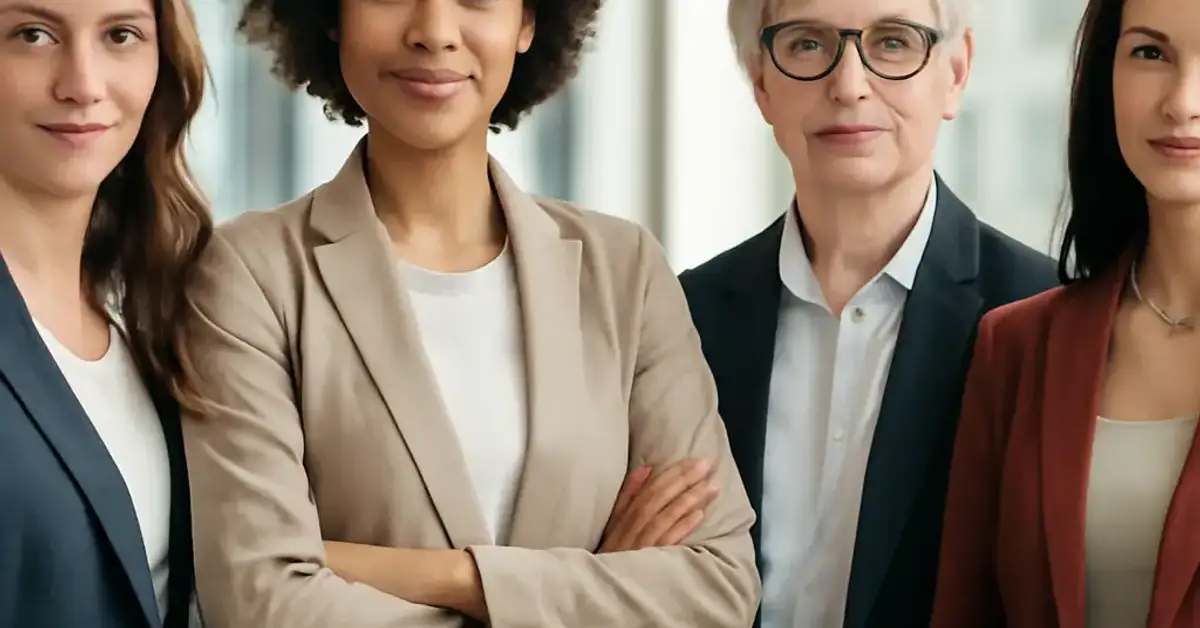
The question “How are beauty standards changing for women leaders?” has become central to conversations about women leadership and workplace perception. Historically, women executives faced a narrow ideal: a tailored suit, conservative hairstyle, and full makeup that signaled seriousness. That template is disappearing.
Today, beauty standards are evolving to reflect a broader definition of professional presence. Instead of asking “Does she look the part?” organizations are asking “Does she bring value?” This shift from appearance-focused judgments toward competence and communication marks a turning point for professional women everywhere.
Research from Harvard Business Review shows that leaders who express authenticity—including through their personal style—are perceived as more trustworthy and effective. As a result, how beauty standards are changing for women leaders directly impacts hiring, promotion, and boardroom dynamics.
The Old Paradigm: Uniformity as Professionalism
For much of the 20th century, professional appearance for women meant minimizing difference. Blazers, modest heels, and neutral makeup were expected. Any deviation risked being labeled “unprofessional” or “distracting.” This standard disproportionately affected women of color, older women, and those with non-normative body types.
The underlying message was clear: to be taken seriously, a woman had to look like everyone else. That message is now being dismantled.
The New Paradigm: Competence and Individuality First
Today, authenticity in leadership is a strategic advantage. Companies that embrace workplace diversity understand that a leader’s appearance is one part of their whole identity—not the defining factor. The shift toward modern beauty standards emphasizes that confidence in leadership comes from skills, vision, and emotional intelligence, not from fitting a mold.
For example, a 2023 study by LinkedIn found that 72% of professionals believe personal branding—which includes style choices—matters more for career advancement than it did five years ago. This reinforces how beauty standards are changing for women leaders toward a more holistic view of presence. For a related guide, see 8 Style Investments Worth Every Peso for Career Women.
The Shift From Rigid Traditional Beauty Expectations Toward Authenticity, Confidence, and Individuality
Why are beauty standards evolving in the workplace? The answer lies in the growing recognition that leadership presence is not synonymous with physical conformity. Authenticity, confidence, and individuality now form the new trinity of executive presence.
Women empowerment movements have encouraged leaders to show up as themselves—whether that means wearing a hijab, sporting gray hair, or choosing a bold red lip. This is not about rebellion; it is about rejecting the idea that a woman must shrink or disguise herself to lead.
One powerful example is the rise of “power casual” dressing among C-suite women. Instead of stiff blazers, many now choose blazers with sneakers or statement jewelry. This signals approachability and self-assurance. The leadership image is no longer about perfection; it is about presence.
How Confidence and Communication Replace Appearance-Focused Judgments
When how beauty standards are changing for women leaders is discussed, the role of communication rises to the top. Executives are now evaluated on how clearly they articulate vision, how they listen, and how they inspire—not on whether their lipstick matches their outfit.
Research from the Center for Creative Leadership found that women who focus on developing assertiveness, empathy, and storytelling skills advance faster than those who obsess over grooming. This does not mean appearance is irrelevant; it means it is one of many factors, not the primary one.
How Modern Workplaces Increasingly Value Diversity in Looks, Body Types, and Personal Style
Workplace diversity has expanded beyond race and gender to include diversity in looks, body types, and personal style. An inclusive workplace recognizes that professional appearance can vary widely while still being effective.
For instance, the fashion industry has begun featuring plus-size models in leadership roles, and tech companies like Microsoft have celebrated employees who wear natural hair textures. These examples show how beauty standards are changing for women leaders across every sector. For a related guide, see 7 Easy Beauty Habits That Make Women Look More Confident and Elegant.
A 2024 report by Deloitte on DEI workplace practices highlighted that 65% of companies now have appearance-related guidelines that explicitly prohibit discrimination based on hairstyle, makeup, or body size. This legal and cultural shift is accelerating the move toward gender equality workplace norms that value substance over surface.
Breaking Stereotypes Around Age, Weight, and Femininity
One of the most stubborn barriers for career women has been the “appearance penalty” that penalizes women for being too old, too young, too thin, too heavy, too feminine, or not feminine enough. How beauty standards are changing for women leaders directly confronts these contradictions.
Today, women executives like Mellody Hobson (co-CEO of Ariel Investments) openly talk about the pressure to downplay femininity and how they chose instead to embrace it. Similarly, older leaders like Jane Fonda in activism spaces show that gray hair and wrinkles do not diminish authority—they enhance it when paired with experience and passion.
The Role of Personal Branding in Redefining Professional Appearance
Personal branding has become a critical tool for women leaders to define their own leadership image. Instead of conforming to a corporate mold, women can deliberately craft a visual narrative that aligns with their values and strengths.
Consider a tech CEO who wears jeans and a hoodie. That choice signals “I’m approachable and innovative.” A finance executive who favors sleek, minimalist tailoring may signal precision and authority. Both are valid. The key is intention.
Beauty standards are changing for women leaders because personal branding allows women to leverage appearance as a strategic asset rather than a compliance requirement.
Fashion as a Tool for Empowerment Rather Than Restriction
Fashion choices can communicate confidence, creativity, and cultural pride. Women empowerment today includes the freedom to dress for yourself, not for a faceless corporate standard. From pantsuits to power dresses, women are increasingly using fashion to express leadership rather than hide behind it.
This is a direct result of how beauty standards are changing for women leaders
Impact of Social Media and Digital Visibility on Evolving Beauty Expectations
Social media has democratized the definition of a leader. Platforms like LinkedIn, Instagram, and TikTok allow women to build professional women visibility without gatekeepers. This visibility comes with both opportunity and scrutiny.
On the positive side, audiences now see leaders who look like them—curvy, curly-haired, tattooed, or wearing a headscarf. This representation normalizes diversity. On the other hand, digital visibility can amplify appearance pressure. Yet studies show that leaders who share authentic images (including minimal makeup or casual attire) build stronger trust with followers.
Modern beauty standards are increasingly shaped by what works on camera—things like good lighting, confident posture, and clear communication matter far more than a studio-perfect face.
How DEI Initiatives Are Reshaping Workplace Standards
DEI workplace strategies have become a powerful force in redefining professional appearance. Companies that invest in diversity, equity, and inclusion are more likely to review dress codes, grooming policies, and promotion criteria for bias.
For example, many organizations have adopted inclusive language in dress codes, such as “dress for your day” policies that allow employees to choose attire based on their tasks rather than a rigid standard. These policies directly affect how beauty standards are changing for women leaders because they remove arbitrary appearance rules that historically penalized women and people of color.
Gender equality workplace efforts now include appearance equity. That means a woman should not be judged as less competent because she chooses not to wear makeup, has visible tattoos, or prefers a natural hairstyle.
Role of Inclusivity and DEI Initiatives in Reshaping Workplace Standards
Several major corporations, including Accenture and L’Oréal, have implemented “hair inclusivity” training. These programs teach managers that natural Black hairstyles—like braids, twists, and locs—are professional. This is a concrete example of how beauty standards are changing for women leaders through systemic policy changes.
Why Authenticity Is Becoming a Stronger Leadership Trait Than Polished Perfection
The cultural pendulum has swung. Authenticity in leadership now outranks polished perfection. Employees and stakeholders want to see vulnerability, honesty, and realness. A leader who admits a mistake or shares a raw moment on stage is celebrated, not criticized.
This trend directly influences beauty standards. When a leader shows up with a fresh face or a slightly undone look, it signals “I have nothing to hide.” It projects confidence. How beauty standards are changing for women leaders is thus intertwined with the broader movement toward transparency in leadership.
Practical Takeaways: How Women Leaders Can Navigate Changing Beauty Standards
For women leaders, women executives, and career women navigating this landscape, the following steps can help align appearance with authenticity:
- Define your personal branding deliberately: choose a style that reflects your values and industry context.
- Prioritize grooming that enhances confidence, not conformity. Minimal makeup, natural hair, or bold choices—pick what makes you feel powerful.
- Focus on executive presence skills: posture, eye contact, vocal tone, and active listening matter more than an outfit.
- Use visibility opportunities (speaking, social media, networking) to showcase your whole self, not a filtered version.
- Advocate for inclusive workplace policies that remove appearance bias from performance evaluations.
Useful Resources
For further reading on how beauty standards are changing for women leaders and the related research:
Harvard Business Review – The Advantages of Embracing Your Authenticity at Work
Deloitte – Diversity, Equity, and Inclusion Report 2024
Frequently Asked Questions About Beauty Standards Are Changing for Women Leaders
How are beauty standards changing for women leaders?
Beauty standards are moving away from rigid, uniform expectations toward authenticity, confidence, and individuality. Today’s women leaders are evaluated more on competence, communication, and personal branding than on conforming to a specific look.
Why are workplace beauty standards evolving?
Workplace beauty standards are evolving due to increased diversity, DEI initiatives, social media visibility, and a growing recognition that authenticity drives trust and performance. Companies are adopting inclusive policies that value substance over appearance.
How does leadership affect appearance expectations?
Leadership in the modern era is defined by impact, not image. While appearance still matters, the emphasis has shifted to executive presence traits like posture, confidence, and communication, reducing the pressure to fit a narrow beauty ideal.
What is executive presence in modern leadership?
Executive presence today combines gravitas, communication skills, and authentic style. It is less about looking perfect and more about showing up with purpose, clarity, and confidence. Appearance supports presence but does not define it.
How does DEI impact beauty standards ?
DEI initiatives challenge biased dress codes and grooming policies. They promote acceptance of natural hairstyles, diverse body types, and cultural clothing. DEI ensures that beauty standards are inclusive and do not penalize women for being different.
Why is authenticity important for women leaders?
Authenticity builds trust, relatability, and loyalty. Employees and clients connect more deeply with leaders who are genuine. In a world saturated with curated images, authentic leaders stand out and inspire stronger engagement.
How does personal branding influence leadership image ?
Personal branding allows women leaders to intentionally craft a visual and behavioral identity that reflects their values, expertise, and personality. It turns appearance from a compliance requirement into a strategic asset.
Are beauty standards still important in business?
Appearance still matters in business, but the definition of “good appearance” has expanded. Grooming, posture, and professional attire remain relevant, but conformity to a single standard is no longer required. Authenticity and confidence now carry more weight.
How do women balance appearance and leadership?
Women balance appearance and leadership by focusing on what makes them feel capable and credible. They choose styles that align with their personal brand, invest in communication skills, and reject the idea that looking a certain way determines their worth.
What defines modern professional beauty standards ?
Modern professional beauty standards are defined by confidence, authenticity, inclusivity, and intentionality. The focus is no longer on a uniform look but on how a leader’s appearance supports their authority and connection with others.
How can women leaders use fashion as empowerment?
Fashion can be used strategically to communicate leadership values—bold colors for confidence, minimalism for focus, cultural attire for pride. The key is intentional choice rather than conformity.
What role does social media play in beauty standard changes?
Social media amplifies diverse representations of women leaders, normalizing natural hair, minimal makeup, and varied body types. It also forces leaders to balance visual polish with authenticity to build trust.
Are older women leaders affected by changing beauty standards ?
Yes, and positively. The shift toward authenticity embraces gray hair, wrinkles, and experience as signs of wisdom and capability. Age-related appearance penalties are decreasing as competency takes priority.
How does hybrid work reduce appearance pressure?
Hybrid work reduces the emphasis on physical appearance because leaders are often seen via video calls, where communication skills, lighting, and framing matter more than full-body grooming. This has relaxed rigid beauty norms.
What should HR professionals know about changing beauty standards ?
HR should review dress codes, promotion criteria, and training for appearance bias. Inclusive policies that prohibit discrimination based on hairstyle, size, or makeup are essential for retaining diverse talent.
How do beauty standards affect women in male-dominated industries?
In male-dominated fields, women historically felt pressure to downplay femininity. Changing standards now allow them to express personal style without risking credibility. Competence and results are becoming the primary evaluation metrics.
What is the connection between cultural diversity and beauty standards ?
Cultural diversity expands global beauty definitions by introducing different aesthetics—such as traditional fabrics, natural textures, and distinct grooming practices. This enriches what is considered “professional” across markets.
Can minimal makeup improve leadership perception?
Yes, minimal makeup can signal confidence and authenticity. Many women leaders choose a “no-makeup makeup” look that enhances natural features without hiding them, which resonates with modern expectations of transparency.
How does representation in media influence beauty norms for leaders?
As media features more diverse women leaders—of different races, ages, sizes, and styles—it normalizes a broader range of appearances. This reduces the stigma around looking “different” and encourages authenticity.
What is the future of beauty standards for women in leadership?
The future points toward even greater inclusivity, where appearance is seen as a personal expression rather than a professional mandate. Leadership will be defined by competence, character, and the courage to be authentic.