AI Agents for End-to-End Content Marketing Automation Key Takeaways
AI agents transform content marketing by handling the full lifecycle — from research and planning to creation, distribution, and performance analysis — without constant human oversight.
- AI Agents for End-to-End Content Marketing Automation combine research, writing, SEO, and analytics agents into one autonomous workflow.
- Multi-agent setups using tools like ChatGPT, Claude, and Perplexity can reduce manual effort by over 80% on routine marketing tasks.
- Success requires clear agent roles, human oversight at strategy checkpoints, and continuous feedback loops for improvement.
What Are AI Agents in Marketing and Why They Matter in 2026
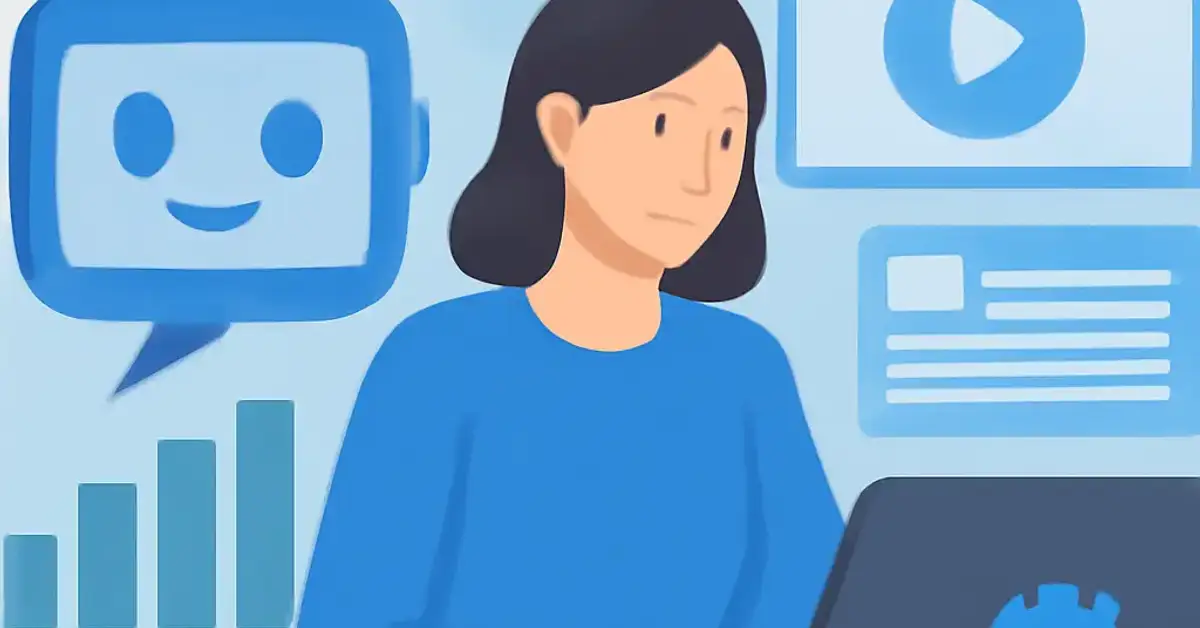
If you are a digital marketer or content strategist, you have likely heard the buzz around AI agents for marketing automation. But what exactly are they? Unlike a single chatbot or a basic text generator, an AI agent is a software program that can perceive its environment, make decisions, and take actions to achieve specific goals. In marketing, these agents can research topics, draft blog posts, optimize content for SEO, schedule social media updates, and even analyze campaign performance — all without you having to micromanage every step.
The shift toward end-to-end content marketing automation is accelerating because time is the most valuable resource a marketer has. When you hand off repetitive tasks to autonomous systems, you free yourself to focus on strategy, creativity, and relationship building. For a professional like Ferlynne Jean Sabanal — who is building a career in digital marketing — mastering these tools early gives a strong competitive edge. The future belongs to marketers who can orchestrate AI rather than just use it for isolated tasks. For a related guide, see How to Use AI for Content Outlines That Actually Rank.
By 2026, we will see AI marketing agents 2026 become standard in most marketing stacks. Early adopters are already using AI-powered content marketing systems to publish high-quality content at scale, personalize customer journeys, and adapt to search engine algorithm updates faster than any human team could.
How to Use AI Agents for Content Marketing Automation: A Step-by-Step Blueprint
The key is to think of AI agents not as replacements for your team, but as force multipliers. Each agent specializes in one part of the content lifecycle. When you connect them in a workflow, you get a smooth, automated pipeline. Let me walk you through the five smartest ways to set this up.
Step 1: Deploy Research Agents for Content Planning Automation
Before writing a single word, you need data. AI research agents for marketing like Perplexity and Gemini excel at gathering competitive intelligence, trending topics, and audience insights. Instead of spending hours browsing competitor blogs or keyword tools, you can ask an agent to compile a report on high-opportunity topics for your niche. For example, Perplexity can search across multiple sources and return a structured brief that includes key questions your audience is asking, related terms, and even content gaps your competitors have missed. For a related guide, see 50+ Free SEO Resources and Templates Every Marketer Needs in 2026.
This is the foundation of AI content planning automation. With a research agent feeding your editorial calendar, you can ensure every piece of content has a clear purpose and a high chance of ranking. I recommend using Gemini for deep research on industry trends and Perplexity for real-time competitive analysis. Together, they form a powerful duo for AI marketing research automation.
Step 2: Employ Writing Agents for AI Content Creation Automation
Once you have a research brief, it is time to generate content. AI writing agents like Claude and ChatGPT can produce drafts that align with your brand voice. The trick is to provide them with clear instructions: tone, target audience, desired structure, and examples of your best work. Claude, in particular, excels at long-form content and maintains logical flow over thousands of words. For shorter pieces like social media captions or email subject lines, ChatGPT works very well.
This stage handles AI content creation automation at scale. You can generate multiple variations of a blog post, test different angles, and then pass the best version to an editor. But do not skip human review entirely — especially for high-stakes pages like your About page or product descriptions. Use the AI as a powerful first draft machine, then refine.
Step 3: Add SEO Automation Agents for On-Page and Technical Optimization
Creating content without optimizing it for search engines is like throwing a party and not telling anyone the address. AI SEO automation with agents takes care of keyword placement, meta descriptions, heading structures, internal linking suggestions, and even schema markup. Tools like Surfer SEO or NeuronWriter already use AI to compare your content against top-ranking pages. But you can take it further by building a custom agent — using ChatGPT’s API or a platform like Relevance AI — that checks your draft against a list of SEO rules.
This is a crucial part of AI agent-based marketing systems. An SEO agent can also monitor your site for technical issues like broken links, slow pages, or missing alt tags, and alert you instantly. When combined with AI SEO content scaling, you can publish dozens of optimized pages per week without drowning in manual checks.
Step 4: Orchestrate Distribution with Multi-Agent AI Marketing Workflows
Content distribution is where the best automation strategies shine. AI social media automation agents can repurpose your blog post into LinkedIn summaries, Twitter threads, Instagram carousels, and even short video scripts. Meanwhile, AI email marketing automation agents can segment your list and send personalized newsletters with the right content to the right person at the right time.
Multi-agent AI marketing workflows handle these tasks simultaneously. For instance, after the SEO agent finishes optimizing your post, it can trigger the social media agent to create and schedule posts, and the email agent to draft a campaign. This orchestration is the heart of AI marketing workflow orchestration. You are not just automating isolated steps — you are connecting them into a seamless pipeline that runs from idea to published campaign with minimal human intervention.
Step 5: Use Analytics and Reporting Agents for Continuous Improvement
The final piece is measurement. AI analytics agents and AI reporting automation tools like Microsoft Copilot can pull data from Google Analytics, search console, and social platforms, then generate plain-English reports. Instead of digging through dashboards, you get a daily or weekly summary that says, “Your blog post about topic X brought in 30% more traffic this week, and here is why.” For a related guide, see The Future of ChatGPT: What Beginners Should Prepare For.
These agents also feed insights back to the research agent, closing the loop. If a certain topic performs well, the research agent will suggest related subjects. If a keyword loses rankings, the SEO agent can recommend updates. This creates a truly autonomous marketing workflow that evolves with your audience and the market.
Building Your First AI-Powered Content Operations System
Now that you understand the components, how do you actually build an AI-powered content operations systems? Start small. Do not try to automate everything at once. Pick one part of your workflow that is the most time-consuming — many people start with content creation or social media scheduling. Test a single agent, learn its strengths and weaknesses, and then add more agents as you gain confidence.
Here is a quick checklist to get started:
- Choose your orchestration platform: Tools like Zapier, Make, or Relevance AI allow you to connect different AI agents into a single workflow.
- Define agent roles clearly: One agent for research, one for writing, one for SEO, one for distribution, and one for analytics.
- Establish human checkpoints: Review the research brief before the writing agent starts, and review the final draft before distribution.
- Set up feedback loops: Use performance data to refine prompts and criteria for each agent.
This approach aligns with AI-first marketing systems and positions you ahead of the curve. For context, Generative Engine Optimization (GEO) and AI Overview optimization are becoming essential as search engines increasingly feature AI-generated summaries. Your agents can optimize content specifically for these new SERP features, ensuring your brand appears in answer engines as well as traditional search results.
AI Agents for End-to-End Content Marketing Automation: Common Pitfalls to Avoid
Adopting this technology is exciting, but it is easy to make mistakes. One common pitfall is relying on a single AI agent for everything. A writing agent cannot do effective SEO research, and an SEO agent cannot craft an engaging email. Use specialized agents for specialized tasks. Another mistake is skipping the human review phase. AI agents can produce grammatically correct content, but they may lack nuance, cultural awareness, or brand-specific insight. Always keep a human in the loop for final approval.
Additionally, watch out for data privacy issues. When using agents like ChatGPT or Claude for sensitive customer data, ensure you are compliant with regulations like GDPR or CCPA. Finally, do not ignore the importance of AI personalization engines. Generic automated content will not resonate. Use your analytics agents to segment audiences and personalize the content each person sees, whether in email, on your website, or in social ads.
Useful Resources
To deepen your understanding of AI marketing stack automation and building autonomous workflows, explore these resources:
- Relevance AI — A leading platform for building multi-agent workflows that handle research, content generation, and distribution.
- Zapier — Essential for connecting different AI tools and marketing platforms without coding.
As Ferlynne Jean Sabanal continues her journey in digital marketing, embracing AI Agents for End-to-End Content Marketing Automation will be a defining skill. The tools are ready. The workflows are proven. Now it is your turn to build systems that let you focus on what truly matters — growing your brand and serving your audience.
Frequently Asked Questions About AI Agents for End to End Content Marketing Automation
What are AI agents in marketing ?
AI agents in marketing are autonomous software programs designed to perform specific marketing tasks — such as research, content creation, SEO analysis, or distribution — without constant human guidance. They can be combined into workflows for end-to-end content marketing automation.
How do AI agents work for marketing ?
They use large language models and APIs to perceive inputs (like a research topic or a content brief), process them according to predefined rules, and take actions (like writing a draft or scheduling a post). They often work together in multi-agent AI marketing workflows.
Can AI replace marketing teams ?
No. AI agents handle repetitive, data-intensive tasks, but they cannot replace human strategic thinking, creativity, empathy, or relationship building. The best results come from humans orchestrating AI marketing agents 2026 to amplify their efforts.
How to automate content creation with AI ?
Start by using a research agent like Perplexity to gather topic insights, then use a writing agent like Claude or ChatGPT to generate drafts. Finally, use an SEO agent to optimize the content before publishing. This is a core example of AI content creation automation.
What are the best AI tools for content automation ?
Top choices include Perplexity (research), Claude (long-form writing), ChatGPT (short-form and brainstorming), Surfer SEO (on-page optimization), and Zapier or Relevance AI (workflow orchestration). Together they form a robust end-to-end AI marketing stack.
How to build AI marketing workflows ?
Define each step in your content lifecycle, assign a specialized agent to each step, and connect them using a platform like Zapier or Make. Set human checkpoints at critical decision points to ensure quality. This is the essence of AI marketing workflow orchestration.
What is an AI-first marketing system?
It is a marketing operations framework where AI agents handle the majority of routine tasks, and humans focus on strategy, creativity, and oversight. It is the foundation of autonomous marketing workflows.
What is Generative Engine Optimization (GEO)?
GEO is the practice of optimizing content so that it performs well in AI-generated search summaries (like AI Overviews). AI Overview optimization is a key tactic within GEO, ensuring your content is cited by AI-powered search engines.
How do I automate email marketing with AI agents?
Use an AI email marketing automation agent to segment your audience, draft personalized subject lines and body copy, and schedule sends based on user behavior. These agents can also A/B test variations automatically.
Can AI agents handle social media scheduling?
Yes. AI social media automation agents can repurpose blog content into platform-specific posts, suggest optimal posting times, and automatically schedule updates across LinkedIn, Twitter, Instagram, and more.
What is the role of analytics agents in marketing?
AI analytics agents collect data from multiple sources, identify trends, and generate reports. They help you understand which content performs best and why, enabling continuous improvement in your AI-driven content operations.
How do I personalize content at scale with AI?
Use AI personalization engines that analyze user behavior and segment audiences. Then, have your writing agent create variations of content tailored to each segment, and your email or website agent deliver the right version to each user.
What is a multi-agent AI marketing workflow?
It is a system where multiple specialized AI agents work together sequentially or in parallel. For example, a research agent passes insights to a writing agent, which passes drafts to an SEO agent, all orchestrated by a central platform. This is the core of AI agent-based marketing systems.
Is AI content creation automation suitable for long-form articles?
Yes. Agents like Claude excel at producing long-form, coherent content. However, always fact-check and add original insights to maintain authority. AI writing agents handle the structure and flow, but human expertise adds value.
What are the risks of using AI agents for marketing?
Risks include lack of brand voice consistency, factual inaccuracies, data privacy concerns, and over-reliance on automation. Mitigate these by setting clear guidelines, reviewing outputs, and keeping a human in the loop, especially for high-stakes content.
How do I start with AI-powered content marketing systems ?
Begin with a single use case — such as automating your weekly blog post research and drafting. Choose one research agent and one writing agent, build a simple workflow, test it, and then expand to include SEO and distribution. This is the most practical how to use AI agents for content marketing automation strategy.
What is the future of marketing automation ?
The future is fully autonomous AI workflows that handle the entire content lifecycle end-to-end. Marketers will shift from executing tasks to designing and optimizing agent systems, with AI handling execution at scale. AI-powered content operations systems will be standard.
How can I measure the ROI of AI agents in marketing?
Track metrics like time saved, content output volume, organic traffic growth, conversion rates, and cost per lead. AI reporting automation tools can compile these metrics into dashboards that show the impact of your agent systems.
Do I need coding skills to build AI agent workflows?
Not necessarily. Platforms like Zapier, Make, and Relevance AI offer no-code interfaces for building AI business automation tools. You can define triggers and actions visually. However, some customization may require basic API knowledge.
What is the best AI agent combination for a small marketing team?
A practical stack for small teams: Perplexity for research, Claude for writing, Surfer SEO for optimization, and Zapier for connecting them. This covers AI content lifecycle automation from idea to publication without overwhelming your team.